HomeKey — 2021–2024
Designing one product that had to belong to everyone.
When we came into HomeKey the brief was narrow and the material was thin: a rough idea, a handful of wireframes, and an app for the handover — the moment a sale closes and a home changes owner. The project was even called Handover. We joined at that point and stayed with it for the next few years, by which time it had become something considerably larger.
Working directly with the founder, we shaped the product experience, the brand, the pitch and the website, and then built the white-label versions that let some of Norway's largest agencies run HomeKey as their own — DNB Eiendom, Krogsveen and EiendomsMegler 1 among them.
One problem ran underneath all of it. A home sale involves sellers, buyers, agents and the agencies behind them, each with different needs and very different reasons for opening the app. The experience had to feel natural to all of them at once, without becoming a compromise none of them wanted.
HomeKey has since grown far past the two people who were building it. It now runs across more than a dozen countries, and grew large enough that its parent company, Marketer, absorbed it as its real estate arm. The core of the design is still there.
The brief was one moment.
Handover is the end of a home sale: contracts, documents, signing, the practical business of moving a property from one owner to the next. That moment was the whole brief.
For the first year it was mostly one designer and one founder. We had worked together on earlier ventures, which meant we could skip the usual circling — and it mattered more than it usually does, because the first useful thing to say was that the brief was too small.
The more we designed the handover, the clearer it became that it couldn't be solved on its own. Almost everything that makes that moment stressful has already been decided months earlier: what was promised, what was documented, what the seller actually understood along the way.
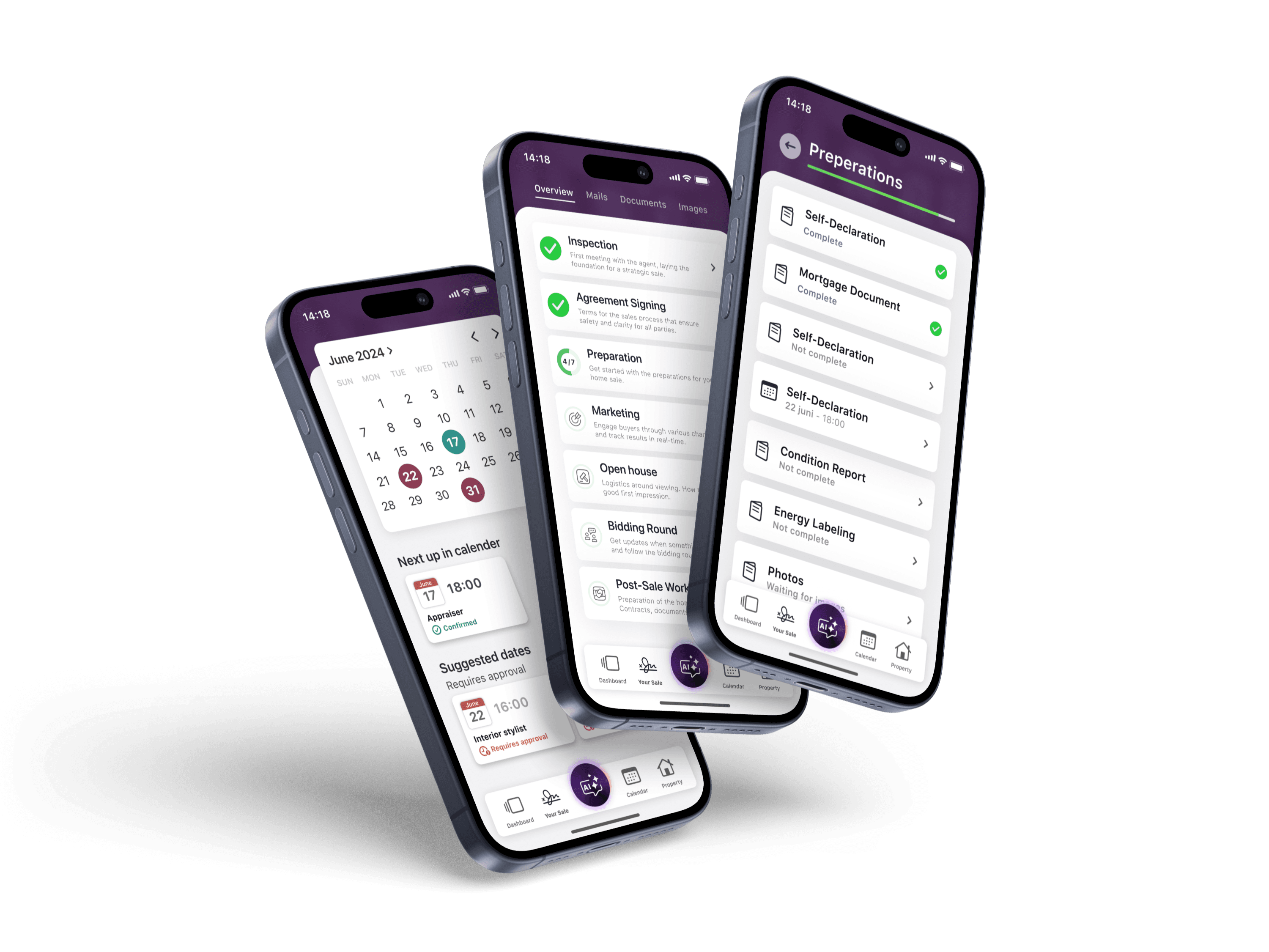
So the scope grew. Handover became one stage in a tool covering the whole sale — the first meeting with the agent, the agreement, preparing the home, marketing, viewings, the bidding round, and the work that follows. The app kept the name for a while after it had outgrown it.
Four parties, one flow.
Selling a home is a process with several people in it, and almost none of them want the same thing at the same time.
Sellers want to understand what is happening and what happens next. Buyers want access and clarity. Agents want to spend less time on coordination and more on selling. The agencies want all of it to reflect well on them.
Most of the UX work went into finding a flow that served all four without flattening any of them — deciding what each party sees, when they see it, and what quietly stays out of the way. We mapped the journeys, built the wireframes and prototypes, and designed the interface across the app and web.
The seller's view became the spine. Everything else was built to support it without crowding it.
One product, many houses.
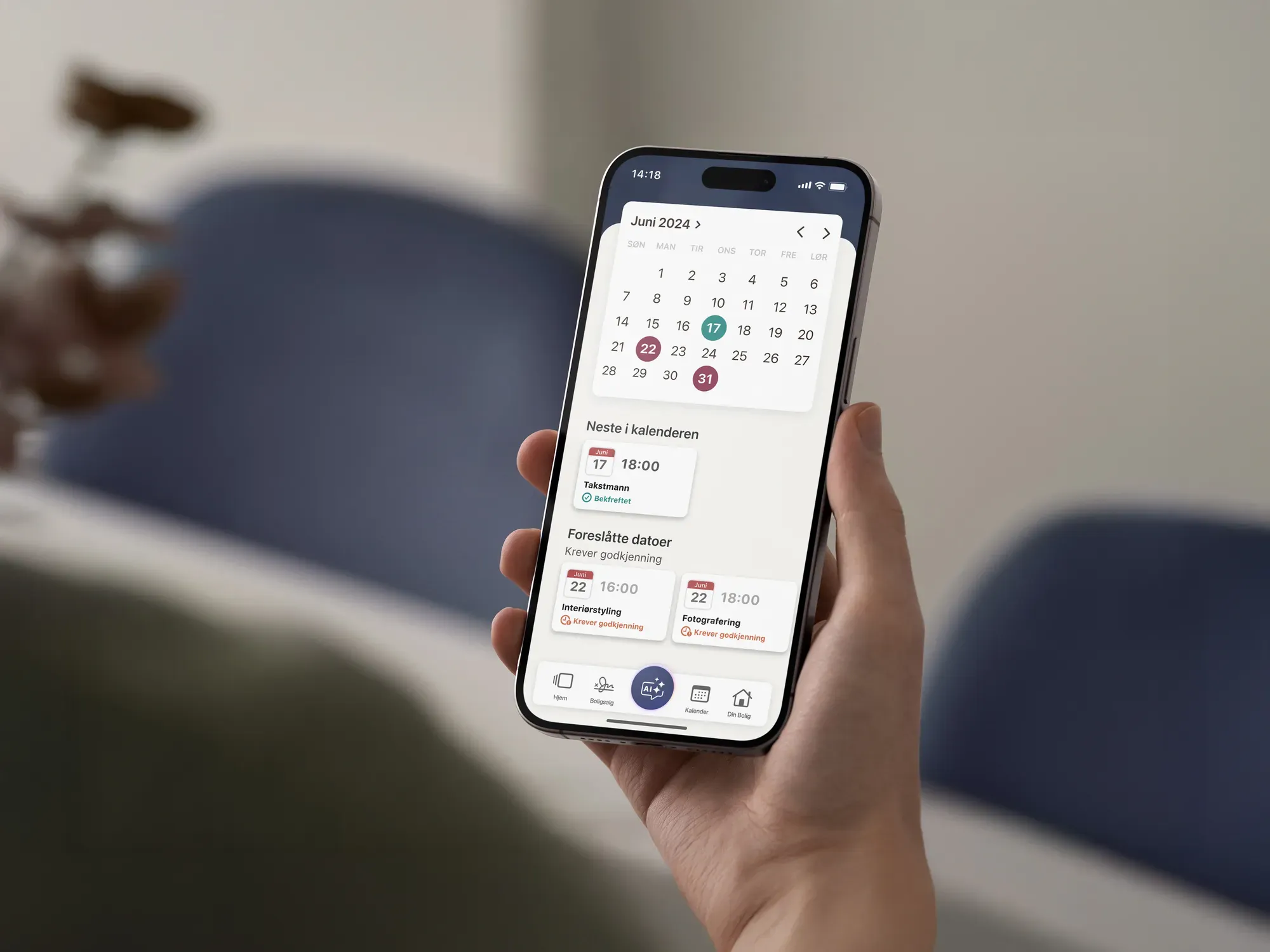
HomeKey went to market inside other people's brands. Each agency needed the app to look and feel like theirs, not like a piece of software they had licensed.
We built and maintained white-label versions for DNB Eiendom, Krogsveen, EiendomsMegler 1, Sem & Johnsen, GARANTI, Rele, HEM and Vest in Norway, and for ERA and EMERA internationally — designing the system so the structure stayed constant while the surface could move. Colour, typography, imagery and tone shifted from agency to agency; the underlying logic, hierarchy and interaction patterns held steady across all of them.
That constraint made the design better. Anything too decorative, or too tied to one brand's taste, broke the moment it was reskinned. What survived was the part that actually worked.
An assistant that knows when to stop.
A lot of the friction in selling a home is informational. Questions arrive at odd hours and feel too small to call an agent about — how many people have signed up for the viewing, what happens after the bidding round.
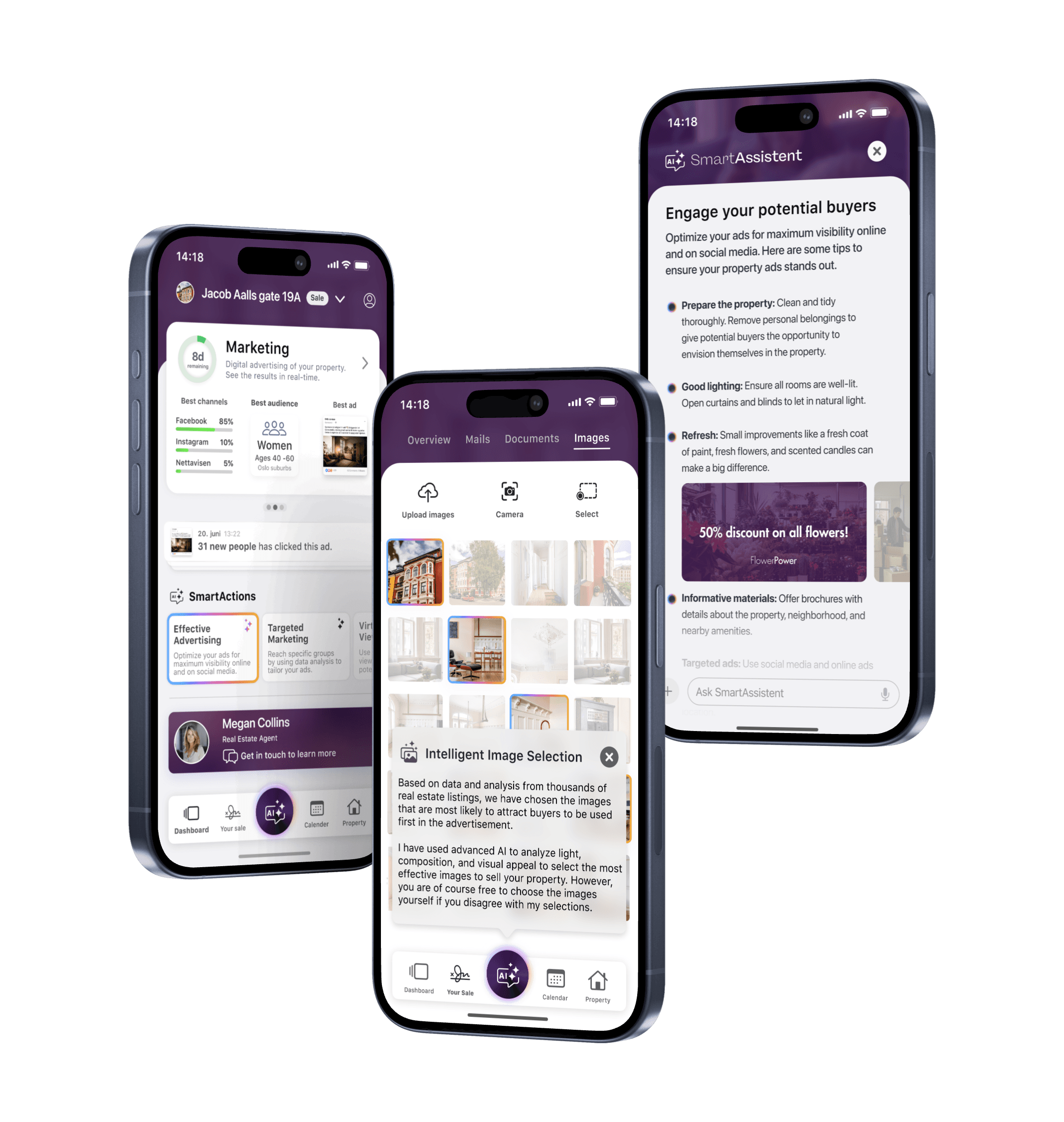
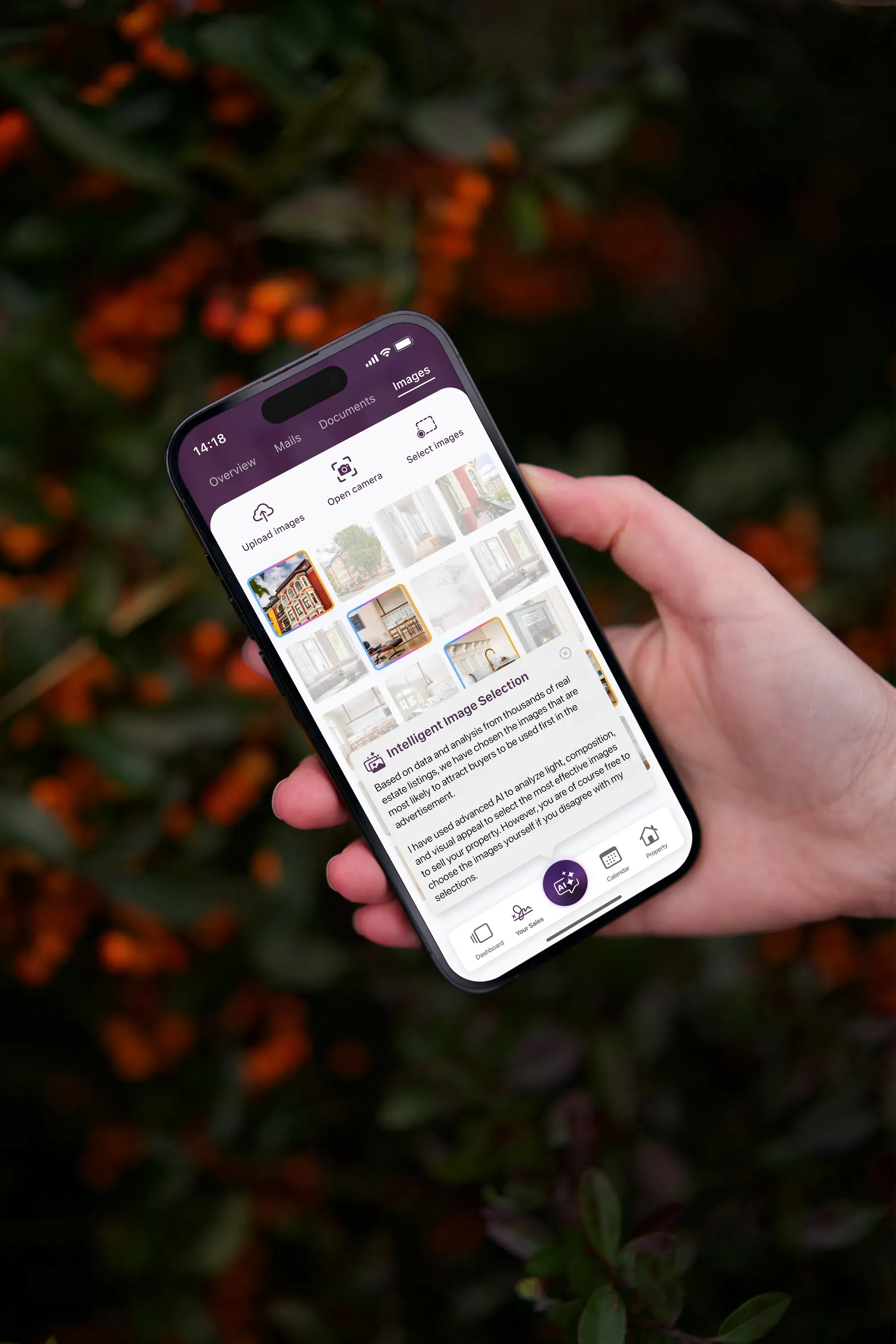
We designed the app's AI assistant and worked on the logic behind it, alongside an image feature that reads light, composition and visual appeal across a listing's photos and proposes which ones should lead the advertisement.
Both raised the same design question, and it wasn't about capability. Selling a home is one of the largest decisions most people make, and an AI that quietly makes choices on your behalf inside that decision is a problem, however good the choices are.
So the assistant explains its reasoning, and then hands the decision back: here is what I picked and why, and you are free to disagree with me. Writing that sentence into the interface was a design decision, not a copy decision.
Generated material, all the way through.
Generative AI arrived in the middle of this project, and it became working material almost immediately.
Instead of stock photography and greyed-out placeholder text, we generated the imagery and the copy the interface would realistically hold, so screens could be reviewed as something close to the real thing long before the real thing existed. The same approach ran into the promo work: generated footage and voice-over cut together with app mockups to show a product that was still being built.
It changed the pace more than the process. Ideas could be tested, discarded and rebuilt in a day, and conversations with the founder happened around something concrete rather than something described.

Outgrowing the room it started in.
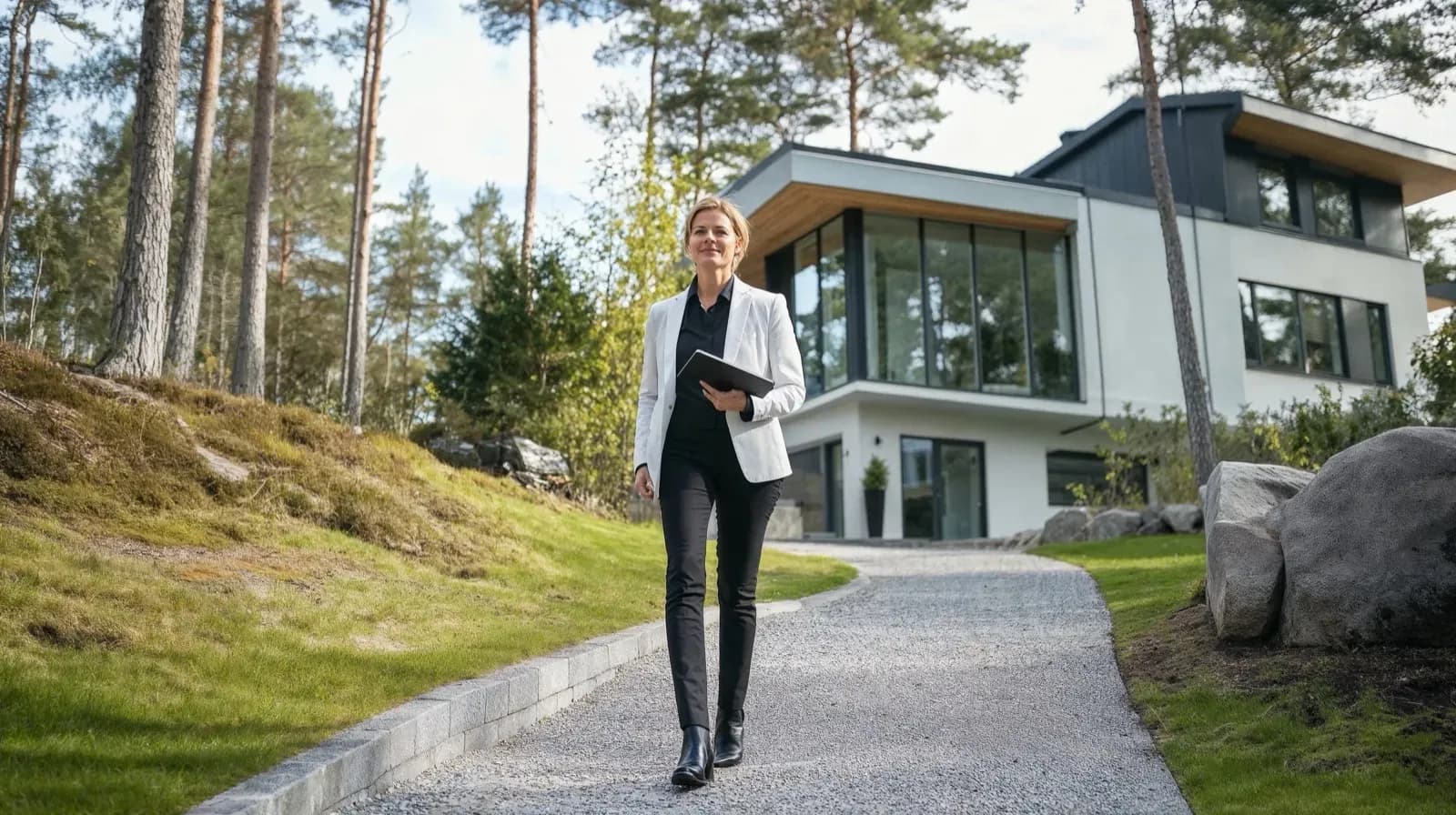
HomeKey now runs in more than a dozen countries, holds around 60% of the Norwegian market and roughly half of the Dutch, and eventually became large enough that its parent company absorbed it as its real estate arm.
It also has a team of its own now, and in-house designers who have carried the work far past where we left it. That is what this kind of work is for. Our role was to take an early idea and give it enough form to be pitched, sold, built and handed over — a product experience, a brand and a system that could survive other people continuing it.
The app has changed a lot since. The foundation underneath it hasn't.