The Future of Creative Tools
How a new generation of AI-powered tools is reshaping the way designers and developers collaborate, create, and ship products that matter.
The creative industry is undergoing a transformation unlike anything we have seen before. New tools powered by artificial intelligence are not replacing designers and developers — they are amplifying their capabilities, allowing them to move faster and think bigger than ever.
What makes this moment different from previous waves of automation is the nature of the tools themselves. Rather than rigid templates or constrained editors, the new generation of creative software understands context, adapts to individual workflows, and learns from the broader creative community.
At Alkemist, we have spent the past year working directly with these tools — not as observers but as practitioners. Every client project, every internal experiment, every late-night prototype has taught us something about where the creative profession is heading. What follows is a synthesis of those lessons.

A new model for creative work
For decades, the creative process followed a linear path: research, ideate, design, build, test, ship. Each phase handed off to the next, creating bottlenecks and translation losses along the way. The tools reinforced this linearity — Photoshop for designers, IDEs for developers, spreadsheets for project managers.
Today, that model is collapsing. The most productive teams we studied work in tight, iterative loops where design and implementation happen simultaneously. A designer can describe an interface in natural language and see it rendered in real time. A developer can sketch a rough layout and have it translated into production-ready components.
The implications are profound. When the cost of creating a high-fidelity prototype drops to nearly zero, the entire decision-making process shifts. Teams no longer debate in the abstract — they build and test. Stakeholders no longer squint at wireframes — they interact with functional prototypes. The conversation moves from "what should this look like" to "how does this actually feel."
We have seen this pattern play out across every vertical we work in. A healthcare startup reduced their design-to-development cycle from six weeks to four days. A fintech company went from quarterly design refreshes to continuous improvement. A media company now ships editorial layouts in hours that used to take a design team a full sprint.
“The best creative tools disappear into the background. They don't impose a workflow — they adapt to yours.”
This shift is not just about speed. When the friction between thinking and making drops close to zero, entirely new kinds of creative exploration become possible. Teams can test ten variations of a concept in the time it used to take to build one.
Consider the traditional approach to responsive design. A designer would create three or four breakpoint mockups, hand them off to development, and hope the in-between states worked themselves out. With modern tools, responsiveness is built into the process from the start. The tool understands layout constraints and generates adaptive designs that work across the full spectrum of screen sizes.
Or think about brand consistency. Maintaining a coherent visual language across dozens of touchpoints used to require exhaustive style guides and constant review. Now, AI tools can internalize a brand's design language and apply it consistently, flagging deviations before they reach production.
What the best teams are doing differently
We spoke with dozens of creative leads across startups, agencies, and enterprise product teams. Three patterns emerged consistently among the highest-performing groups:
- Living design systems: Components evolve alongside the product. AI tools help maintain consistency even as the system grows across platforms and teams.
- Shared context over handoffs: Everyone on the team understands the user, the business constraints, and the technical boundaries. No more throwing designs over the wall.
- Embracing rapid iteration: Instead of treating each revision as a cost, they see it as a signal of learning. The best work emerges from the rapid evolution of many promising ideas.
- AI as a creative partner: Not a replacement for taste, but a multiplier for execution. The human sets the direction; the tool handles the production.
Behind the scenes at Alkemist

1. Living design systems
First, they treat their design system as living infrastructure rather than static documentation. Components evolve alongside the product, and AI tools help maintain consistency even as the system grows. Second, they invest heavily in shared context — everyone on the team understands the user, the business constraints, and the technical boundaries.
The traditional design system lived in Figma, maintained by a dedicated team, and was always slightly out of sync with the codebase. The new approach treats the design system as a shared artifact — changes propagate bidirectionally between design and code. When a developer improves a component's accessibility, those improvements are reflected in the design tool. When a designer explores a new variant, it can be tested in a real browser within minutes.
2. Shared context over handoffs
The best teams have eliminated the concept of handoffs entirely. Instead of designers completing work and throwing it over the wall to developers, both disciplines work concurrently on the same artifact. The designer shapes the visual language while the developer builds the interaction layer. They share a single source of truth and a common vocabulary.
3. Embracing rapid iteration
Third, and perhaps most importantly, they have changed their relationship with iteration. Instead of treating each revision as a cost, they see it as a signal of learning. The best work emerges not from a single brilliant concept but from the rapid evolution of many promising ideas.
The tools reshaping the landscape
While it is tempting to focus on individual products, the real story is about a category shift. The tools that matter most share a set of common characteristics: they understand design intent, not just pixels. They generate production-quality code, not approximations. They learn from usage patterns and improve over time.
Figma's evolution from a vector editor to a complete design-to-code platform illustrates this trajectory. Vercel's V0 and similar tools have collapsed the distance between a natural-language description and a working interface. Cursor and similar AI-native development environments have fundamentally changed what a single developer can accomplish in an afternoon.
But the most interesting developments are happening at the intersection of these tools. When design, development, and deployment share a continuous pipeline, the traditional boundaries dissolve. A design change can reach production in minutes, not weeks. A performance issue can be diagnosed and resolved without a single meeting.
What this means for creative professionals
The question every creative professional is asking — whether they voice it or not — is simple: what happens to my role? The answer, based on everything we have seen, is encouraging but demands adaptation.
The craft itself is not going away. If anything, the bar for quality is rising. When everyone has access to tools that can generate competent designs, the differentiator becomes taste, judgment, and the ability to make decisions that serve both the user and the business. These are fundamentally human skills that AI amplifies but cannot replace.
What is changing is the ratio of time spent on execution versus thinking. A senior designer who used to spend 60% of their time pushing pixels now spends that time on strategy, user research, and creative direction. A developer who used to write boilerplate now focuses on architecture and performance. The tools handle the commodity work; the human handles the judgment calls.
Isak Gundrosen
"The gap between design and development has never been smaller. We ship in days what used to take weeks."
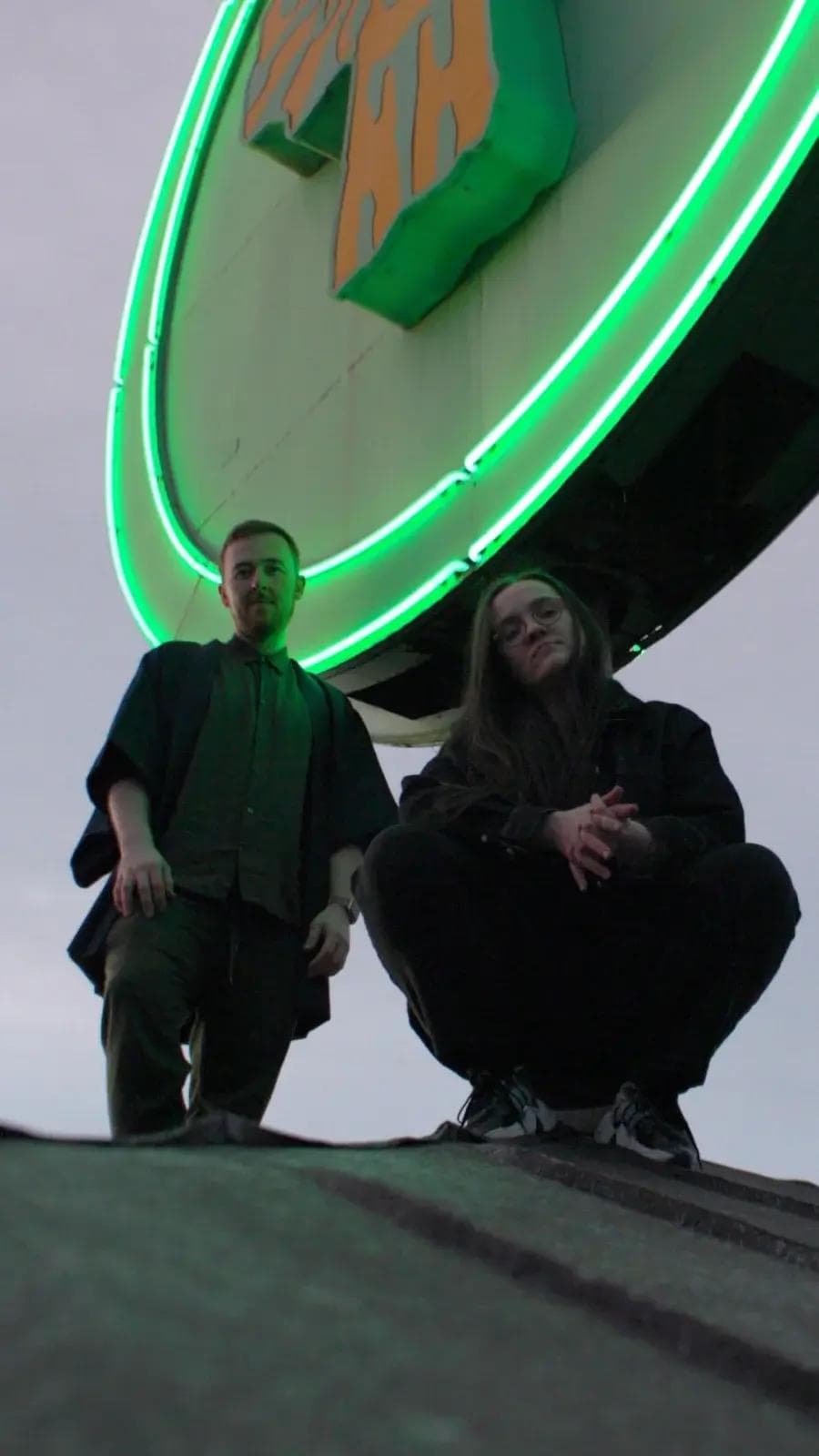
Natalia Mojzych
"Great tools amplify creativity. Our job is to remove every barrier between the idea and the result."
Looking ahead
We are still in the early chapters of this transformation. The tools will continue to improve, the workflows will continue to evolve, and the boundary between design and engineering will continue to blur. But the fundamental lesson is already clear: the future of creative work is not about any single tool or technology.
It is about removing the barriers between imagination and execution. When creative professionals can move at the speed of their ideas, the results are not just faster — they are fundamentally better. And that is a future worth building toward.
Over the coming months, we will be publishing deeper dives into specific aspects of this shift — from the technical architecture of modern design systems to the organizational changes required to fully embrace AI-augmented workflows. If you are building in this space, or navigating this transition within your team, we would love to hear from you.
“The future of creative work is not about choosing between human craft and machine efficiency. It is about building systems where both amplify each other.”